
hafrashas challah, simply.
The basics of the mitzvah in two minutes, in English and in Yiddish. This is general information; for any question, consult your Rav.
The mitzvah
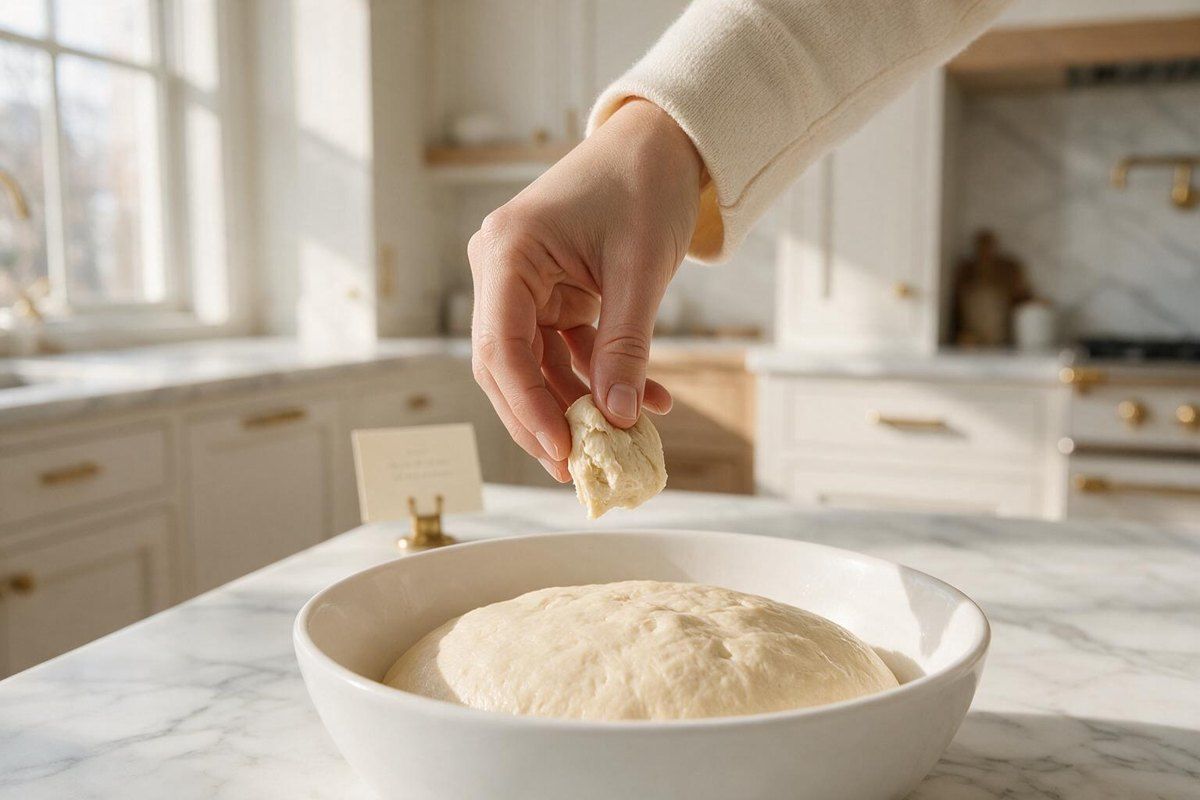
The Torah tells us to separate a portion from our dough, "reishis arisoseichem", and in the times of the Beis Hamikdash it was given to the Kohen. Today we still separate challah, and the piece is not eaten.
Which dough
The mitzvah applies to dough made from the five grains: wheat, barley, spelt, oats and rye. Dough made only from other flours, such as rice or corn, does not have this mitzvah.
How much flour
The amount of flour decides whether challah is taken, and whether with a bracha. Many follow these amounts: about 2 lb 10 oz (1.2 kg) to take challah without a bracha, and about 4 lb 15 oz (2.25 kg) to take it with a bracha. Shiurim differ, so ask your Rav for your family's shiur.
When
Challah is usually taken after the dough is kneaded, before it is shaped and baked. If you forgot, it can often still be taken from the baked challos. Ask your Rav what to do.
How
Say the bracha "asher kidshonu b'mitzvosov v'tzivonu l'hafrish challah", separate a small piece (many take about the size of an olive), and say "Harei zu challah". Wrap the piece and burn it or dispose of it respectfully, as your Rav instructs.
A time for tefillah
The moment of hafrashas challah is a special eis ratzon. Many women daven for their family, for refuah, shidduchim, parnassah and children, and for the name of the week of their group.